About
The story — from a curb in front of the Hard Rock to the building of Seba.Health.
Cody Peterson
is a trickster.
He works at the border of Homeric philology and archetypal psychology, examining what inherited language preserves of feeling and the formation of value. He is the author of The Shadow of a Figure of Light (Chiron Publications, 2024), “Taming Wild Beasts” (Jung Journal, 2025), and “The Iron Thūmos and the Empty Vessel” (Jung Journal, in press).
He designs AI-assisted research programmes that put Jung’s call to leave the “thickly walled specialist fortress” into practice. His Homeric work joins close reading to a reproducible corpus, allowing grammatical claims to be checked against the ancient Greek. He is also the founder of Seba.Health, a depth-psychology research platform operated on a not-for-profit basis.
He studies psychology at the University of Utah and has been accepted to a master’s programme at Adams State University, beginning January 2027.
Explore the research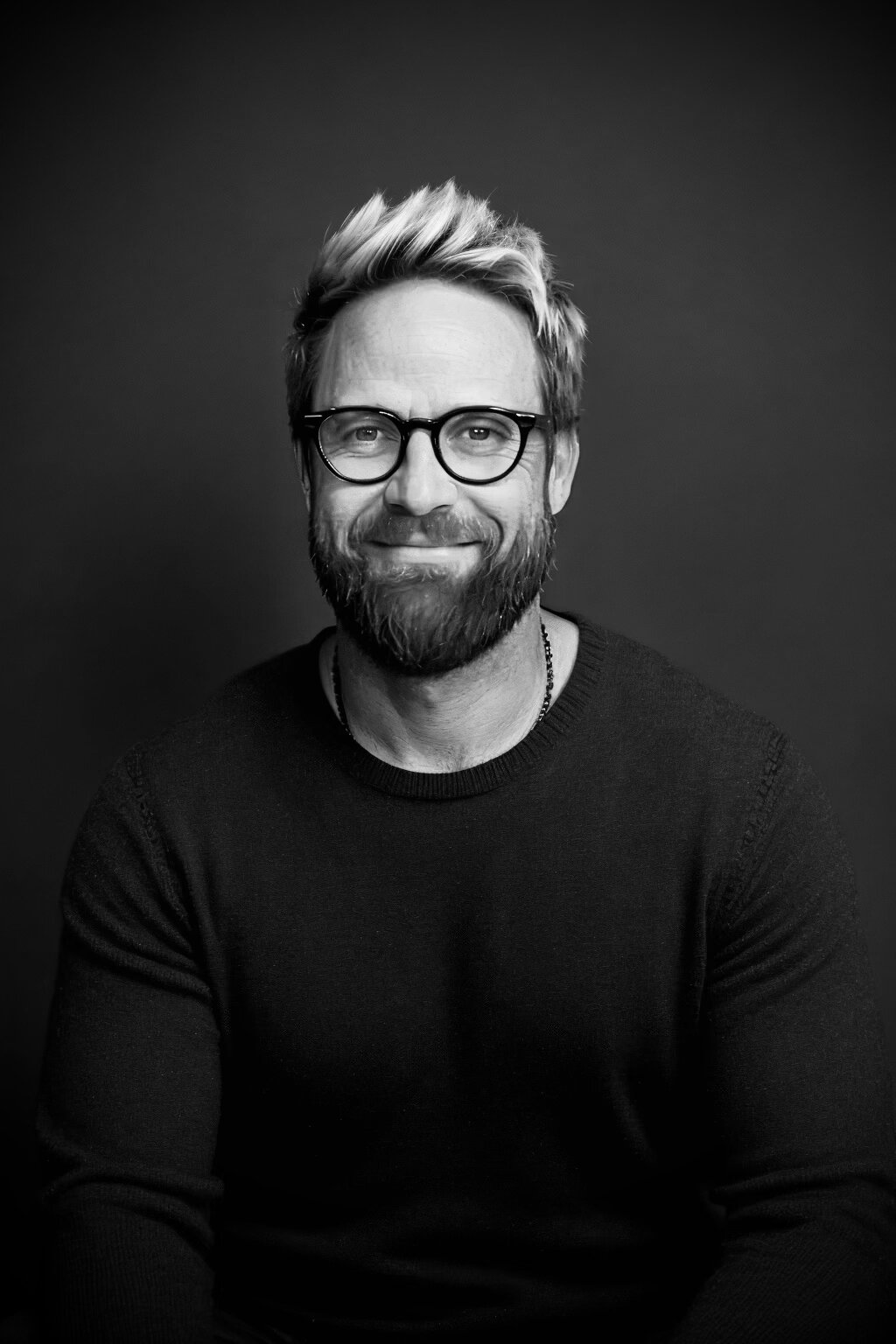
I grew up in an alcoholic home in St. George, Utah. Nobody talked about God. Nobody practiced anything. We had these really basic conversations about whether anyone believed in anything, and it wasn’t clear that they did. I started drinking when I was fourteen and became an alcoholic essentially overnight. I was using drugs every day shortly after that, and by the time I was seventeen I’d dropped out of high school, been arrested, spent time in juvie, and my mom had kicked me out of the house.
A friend of mine had become a Mormon. We used to drink and party together, but he was getting ready for a mission, and when I showed up at rock bottom he was happy to take me in. I moved into his house. Over the next eight months, something started to shift. I was preparing for a mission of my own, and I was reading the Book of Mormon — Moroni, chapter 10, verses 3 through 5: “If ye shall ask with a sincere heart, with real intent, having faith in Christ, he will manifest the truth of it unto you, by the power of the Holy Ghost.” So I said that prayer. And as I sat there, something happened that I can only describe as nearly identical to Bill Wilson’s White Light experience. This kernel of joy was planted in my heart, and it started to sprout. Slowly, this overwhelming feeling of peace and love spread through my body and filled the entire room. I just sat there and basked in it.
That was the beginning of what I call my spiritual adventure.
But alcoholism would have its way with me. After my mission to Argentina, I relapsed. I got married, had two kids, got divorced. I wound up in jail in 2005 — six months — and that’s where I was introduced to AA and the 12 steps. I managed about eighteen months of sobriety, then relapsed again. I went in and out of the rooms for years, and somewhere in there I ended up homeless in Las Vegas. I had a car for most of it. I could crash at my girlfriend’s place sometimes. But I spent a lot of time in trap houses, and by the end I was on the streets.
The last night I was drinking, it was cold and it was dark. I was at the Hard Rock casino — the one that used to be on Harmon and Flamingo, before they moved it to the Strip. I’d gone over there with these delusions of grandeur, thinking maybe I could hook up with some girls, maybe score some heroin. I was homeless. I had no money. I’d been awake for days on methamphetamines, and I kept falling asleep in different spots inside the casino until a security guard finally ushered me out. I sat down on the curb.
And then a limo pulled up.
All these beautiful young people got out — dressed to the nines, drinking champagne, walking into the club. They walked right past me. I was sitting there on the curb, and I noticed something: they didn’t look at me. When I looked around, nobody else was looking at me either. And it hit me — they weren’t looking at me because they were afraid I was going to ask them for something. I realized that there’s a group of people I don’t like to look at either, and it’s for the same reason. It’s not that I don’t love them or care about them. It’s that I don’t want to have to tell them no.
I was thirty-four years old. Deadbeat dad. Unemployable. No driver’s license. Warrants in four states. And sitting on that curb, I had this moment of clarity: My problem is that I think I know everything. I thought I knew how spirituality was supposed to work because I’d had that white light experience. I thought I knew how AA was supposed to work because I’d strung together eighteen months one time. I’d been living my whole life pretending to know how it was supposed to go, and I couldn’t keep any of it together. I hadn’t seen my kids in a year.
I got sober on March 4, 2013. I haven’t had a drink or a drug since.
Five or six years into sobriety, I returned to my love of books. I picked up Joseph Campbell again and loved it, because I could finally understand it. I got deep into Eastern meditation. I spent years rock climbing and trail running — my wife and I lived near Zion National Park for five years, and that’s where something started to stir. Campbell always talks about Jung, and I thought, Well, I should give Jung a whirl. The first book I picked up was Symbols of Transformation. I chose it because I liked the name. I quickly read six or seven more — Psychology and Alchemy, Aion, Archetypes and the Collective Unconscious, Volume 11. At a certain point I remember thinking, This stuff is so good. It’s so similar to what I’ve experienced in getting sober. Jung just got it. I felt this deep, immediate connection to his work.
And then one morning I woke up and thought: I have to start writing. I didn’t know what about. But I started, and what emerged was a book called The Shadow of a Figure of Light: The Archetype of the Alcoholic and the Journey to Enlightenment, published by Chiron Publications. I’m really proud of it. The opening chapters trace the relationship between Jung’s ideas and the development of Alcoholics Anonymous, bringing that history into conversation with my experience of recovery.
What I mean by the “archetype of the Alcoholic” is something Bill Wilson said on page 62 of the Big Book: “The alcoholic is an extreme example of self-will run riot, though he usually doesn’t think so.” That’s the essence of it. The alcoholic is a person driven by something deep inside — a thirst for spirituality, a thirst for wholeness. Alcohol recreates that feeling of wholeness, temporarily. But the reason this is an archetype and not just a diagnosis is that all of us experience it. Everybody’s driven by something. What’s doing the driving lives deep down inside, and in Jungian terms, it’s the Self — pushing us toward wholeness whether we cooperate or not.
Somewhere in those early years of sobriety I started a rain gutter company. City Seamless Rain Gutter began as just me and a truck. I learned the trade, hired guys, built it into a real operation in the Las Vegas Valley. There is something about working with your hands that sobriety demands — you cannot think your way into right living, you have to build your way there. The gutter business taught me that. Every job is a problem you solve with your body: measure, cut, hang, seal. The house either drains or it does not. There is no theory of rain gutters. There is only the work.
Out of City Seamless came 702 Alliance — a vetted network of locally owned businesses across the Las Vegas Valley. I started it because I kept meeting other tradesmen and small operators who were good at what they did but invisible online. Plumbers, electricians, roofers, landscapers — people who built things with their hands and had no idea how to show up when someone searched for them. The aim is simple: help people find local businesses whose work they can trust. I built it because I know what it is like to be good at something and have nobody see you.
Since that first book, I’ve published in Jung Journal: Culture & Psyche. I’ve given lectures and workshops on recovery, dreams, and depth psychology. Some of those conversations are collected in the lecture archive. I’ve gone back to school for my undergraduate degree in psychology, and I’ve been accepted to a master’s programme at Adams State University, beginning in January 2027. I am continuing toward clinical work.
And now I’m building Seba.Health.
Seba.Health is a research platform, rooted in my writing about recovery and three movements I have come to call spirit, soul, and thumos. The first addresses the archetype of the alcoholic — compulsion and the thirst for wholeness. The second grows from my experience of spiritual bypass: aspiration could also become a way of moving above pain. My later work returns to the feeling that remained, a second reawakening that led me toward the ancient language of thumos. These are ways I understand my own recovery and the questions it opened.
That night on the curb in front of the Hard Rock, nobody looked at me. Now I’m building something for the people nobody looks at.